Hyperbaric Chamber Maintenance Guide
Build a responsible maintenance program around instructions, inspections, records, training, and service planning.

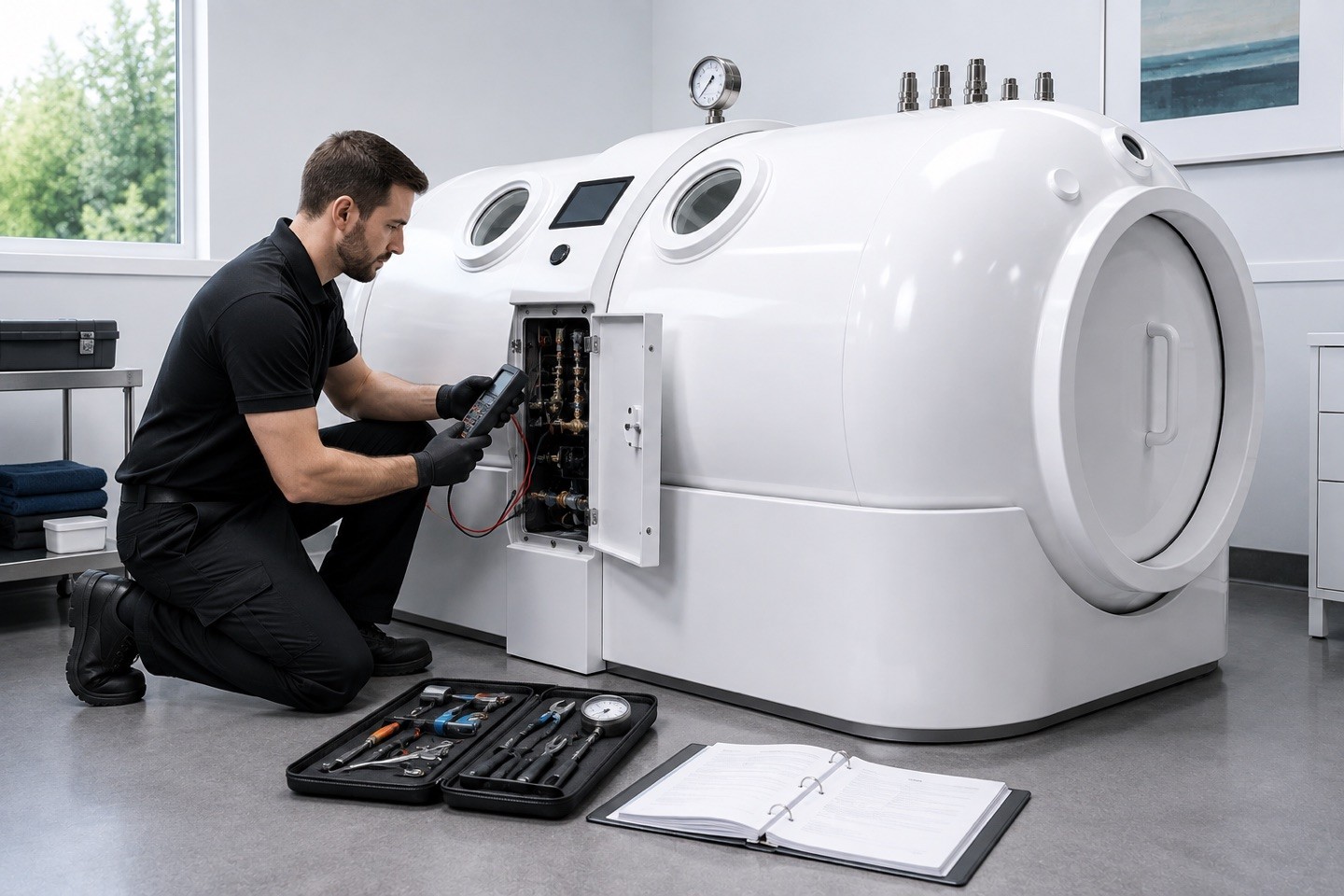





Reliable chamber ownership requires a system. A responsible maintenance program connects manufacturer guidance, daily observation, scheduled service, accurate records, trained staff, and a clear plan for technical support. It is not a substitute for equipment-specific instructions or qualified service, but it helps a facility recognize and organize the work that keeps ownership disciplined.
Begin with manufacturer instructions
Start with the current instructions, service documentation, recommended intervals, and approved parts or procedures for the exact equipment in service. Keep these documents accessible to the people who operate, maintain, and manage the chamber. When requirements change or equipment is modified, update the controlled set of records rather than relying on memory or informal copies.
Separate operator checks from technical service
Daily or routine operator observations should be clearly distinguished from work that requires qualified technical personnel. Define what staff can inspect, document, and report; define what must be referred for service. This protects the equipment, clarifies responsibilities, and reduces the risk that an abnormal condition is handled outside the approved process.
Schedule preventive work
Build preventive service around the recommended intervals, operating environment, utilization, and service history. Coordinate planned work early enough to manage schedules, personnel, and any required parts. A visible calendar or tracker helps turn maintenance from a reactive task into a routine operating responsibility.
Protect the maintenance record
Record inspections, observations, repairs, parts, testing, service providers, dates, and return-to-service decisions in one usable history. Include the equipment identity and relevant documentation with each entry. A complete record supports continuity when staff change and gives technical support a practical starting point when questions arise.
Treat recurring issues as lifecycle signals
Repeated interruptions, recurring adjustments, or frequently replaced parts can indicate a broader maintenance or lifecycle question. Review the record for patterns, operating conditions, and prior interventions. Escalating early with complete information is often more useful than treating every recurrence as an isolated event.
Need technical assistance? Submit a Support Request.